Jun, 03, 2026
Media AlertsCollectionsNew AcquisitionsModern and Contemporary ArtAmerican and Western American Art
Phoenix Art Museum premieres newly commissioned work by Chemehuevi contemporary photographer Cara Romero during June First Friday event
On June 5, the Museum and Romero unveil the artist’s first triptych, a large-scale photographic work inspired by our shared connection to the desert landscape, as part of First Friday celebration
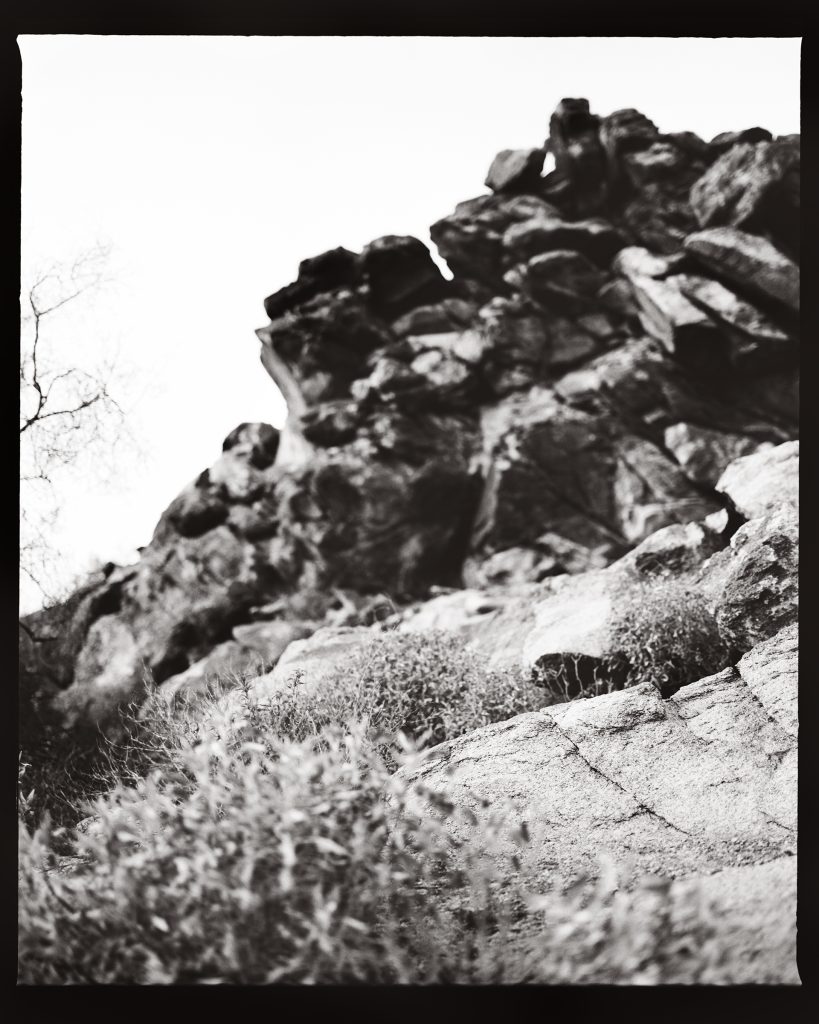
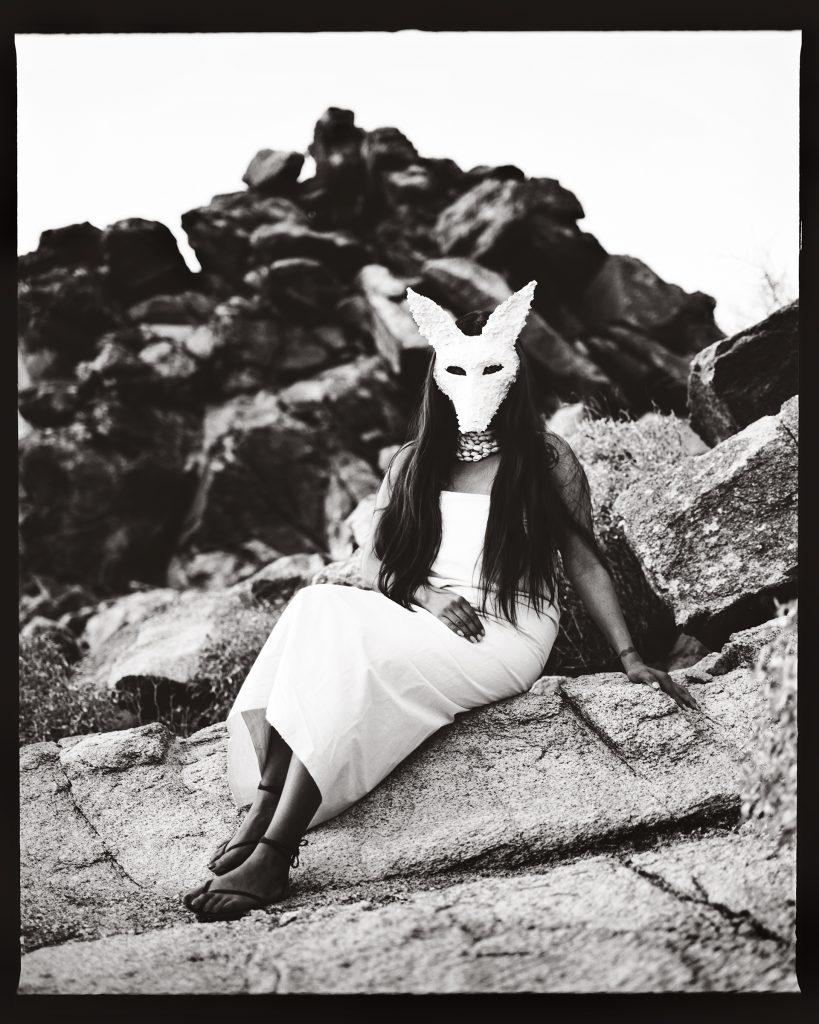
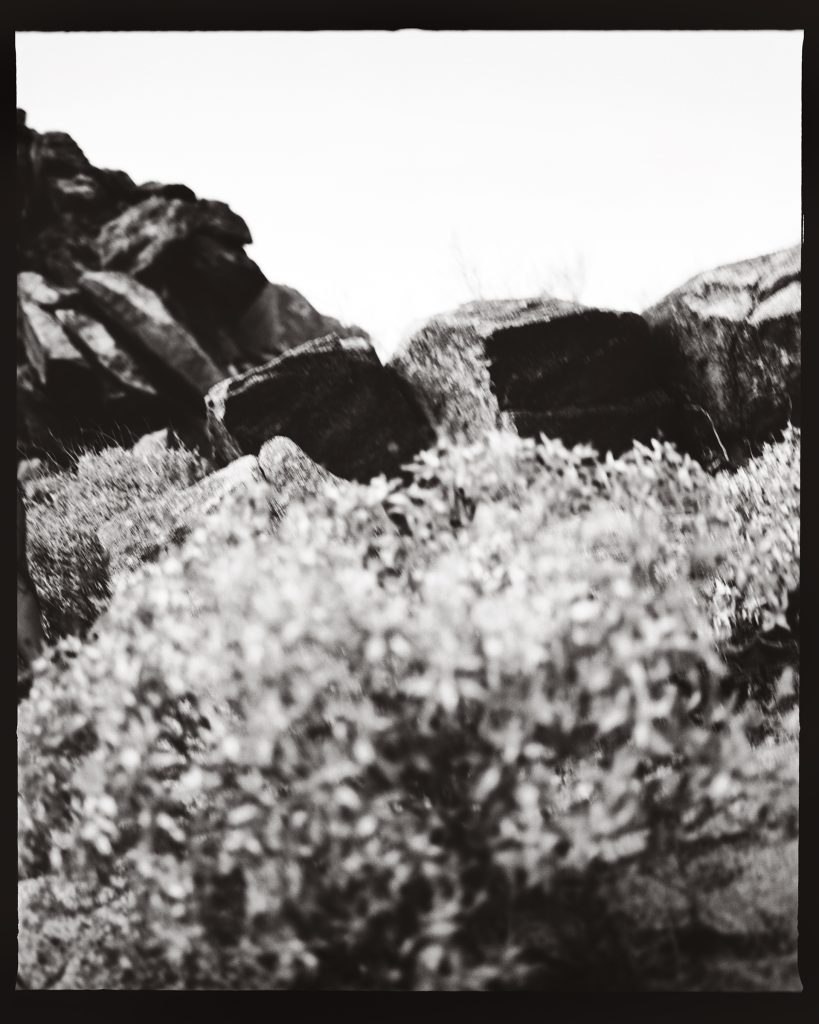
Cara Romero, Coyote Appears at Muhaḍagĭ Doʼag (Greasy Mountain), 2026, archival pigment print. © Cara Romero. Image courtesy of the artist.
PHOENIX, AZ (June 3, 2026) – During First Friday on June 5, 2026, Phoenix Art Museum (PhxArt) will premiere Coyote Appears at Muhaḍagĭ Doʼag (Greasy Mountain), a new commission by contemporary photographer Cara Romero, whose first major museum exhibition, Cara Romero: Panûpünüwügai (Living Light), is currently on view at PhxArt through June 28, 2026. The artist’s first triptych, the large-scale photograph was created at South Mountain Park and Preserve in Phoenix and depicts Dre Noline who is both San Carlos Apache and Salt River Pima-Maricopa reclining within the landscape and embodying the human connection to Coyote and all animals.
“We are honored to welcome Coyote Appears at Muhaḍagĭ Doʼag (Greasy Mountain) by Cara Romero into the permanent collection of Phoenix Art Museum,” said Jeremy Mikolajczak, the Museum’s Sybil Harrington Director and CEO. “Cara is one of the most important voices in contemporary photography today, with deep ties to the Desert Southwest, and this work marks a powerful return to black-and-white film after nearly two decades of working digitally. The piece is both visually striking and deeply thoughtful in its reflection on humanity’s relationship to the land, centering Indigenous materials, perspectives, and practices in a way that feels urgent and timeless. We invite our community to join us for June First Friday as we celebrate the unveiling of this extraordinary work.”
Grounded in regional, collaborative storytelling with Native peoples, Coyote Appears at Muhaḍagĭ Doʼag (Greasy Mountain) is emblematic of Romero’s practice in touching on universal themes of women’s empowerment, environmental stewardship, and the role of landscape in shaping identity. The image’s model connects us to Coyote, who exists as both herself and a conduit for the Coyote spirit. She wears a shell necklace, a Pima cotton dress, and Pima sandals, markers of her ancestral connection to this landscape and peoples of Phoenix. Romero made the Coyote mask and collaborated with fiber artist Leah Mata-Fragua to create the model’s necklace. The sandals are the model’s personal shoes, an intimate detail demonstrating the way Romero invites her sitters to take part in the creative process alongside her.
“This photograph honors the desert landscape and Indigenous Mythos that emerges from it,” said Romero, whose homelands are on the Chemehuevi Valley Indian Reservation. “It considers flora and fauna as sentient beings and how they can teach us about being in relationship—how all living things are interconnected. The image is a gentle offering and reminder of our shared connection to our landscape.”
Coyote Appears at Muhaḍagĭ Doʼag (Greasy Mountain) is currently on view on the first floor of the Museum’s Katz Wing for Modern Art, placing Romero’s work in conversation with other contemporary artists creating large-scale works rooted in place. Organized by the Hood Museum, Dartmouth, the artist’s exhibition Cara Romero: Panûpünüwügai (Living Light), is showcased on the second floor of the Katz Wing for Modern Art, providing a focused view into the artist’s practice. Featuring 60 iconic large-scale photographs spanning a decade, the exhibition illuminates the way Romero blends fine art and editorial styles to challenge dominant narratives of Indigenous decline and erasure and to disrupt preconceived notions about what it means to be a Native American.
High-resolution photography of the new commission can be found here. For additional inquiries, contact the Communications Office of Phoenix Art Museum kaylee.weyrauch@phxart.org or press@phxart.org.
About Cara Romero
Cara Romero, b. 1977, Inglewood, Calif. (American / Chemehuevi), is an artist known for dramatic fine art photography that examines Indigenous life in contemporary contexts. An enrolled citizen of the Chemehuevi Indian Tribe, Romero was raised between contrasting settings: the rural Chemehuevi reservation in Mojave Desert, California, and the urban sprawl of Houston, Texas. Informed by her identity, Romero’s visceral approach to representing Indigenous and non-Indigenous cultural memory, collective history, and lived experiences results in a blending of fine art and editorial styles. Maintaining a studio in Santa Fe, New Mexico, Romero regularly participates in Native American art fairs and panel discussions and was featured on PBS’s Craft in America in 2019. Her award-winning work is included in numerous public and private collections, domestically and internationally, including the Metropolitan Museum of Art, Museum of Modern Art, Whitney Museum of American Art, Guggenheim Museum, Amon Carter Museum, Peabody Essex Museum, and Forge Project Collections, among others. Romero travels between Santa Fe and the Chemehuevi Valley Indian Reservation, where she maintains close ties to her tribal community and ancestral homelands.
About Phoenix Art Museum
Since 1959, Phoenix Art Museum (PhxArt) has engaged millions of visitors with the art of our region and world. Located in Phoenix’s Central Corridor, PhxArt creates spaces of exchange and belonging for all audiences through dynamic exhibitions, collections, and experiences with art. Each year, 300,000 guests on average engage with critically acclaimed national and international exhibitions and the Museum’s collection of more than 21,000 works of American and Western American, Asian, European, Latin American, modern, and contemporary art and fashion design, along with vibrant photography exhibitions made possible through the Museum’s landmark partnership with the Center for Creative Photography at the University of Arizona in Tucson. PhxArt also presents live performances, outstanding examples of global cinema, arts-education programs and workshops, a monthly live-music series, and more for the community. To learn more about Phoenix Art Museum, visit phxart.org, or call 602.257.1880.
###